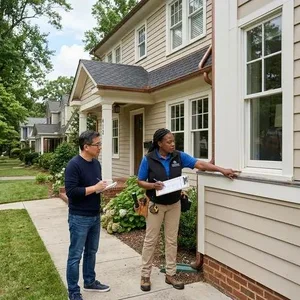
You found the house.
You really want it.
Then your agent says there are multiple offers.
Suddenly, the conversation changes.
"We could make your offer stronger if you waive some contingencies."
And that's when buyers start asking a very important question.
How much protection am I willing to give up to get the house?
In a competitive market, waiving contingencies can make an offer more attractive to a seller. But there's a difference between making a strong offer and taking unnecessary risks.
The right answer depends on the property, your finances, and exactly what you're agreeing to waive.

🚨 Thinking About Buying in Wayne NJ?
👉 DM "KPG" or call 201-400-7323
What Exactly Are Contingencies?
Contingencies are conditions written into a purchase contract that can provide a buyer certain protections before the transaction moves forward.
Depending on the contract and circumstances, they can relate to things like:
Home inspections
Financing
Appraisal
Sale of the buyer's existing home
Other specific conditions
They exist for a reason.
You're making one of the biggest purchases of your life. Contingencies can give you an opportunity to address certain problems before you're fully committed.
But in a competitive market, buyers sometimes consider giving up some of those protections to make their offer more appealing.
That's where the debate starts.
Why Would a Buyer Waive One?
Simple.
Leverage.
If a seller has five offers and one buyer is offering a similar price with fewer contingencies, that offer may be more attractive because there are fewer potential obstacles between contract and closing.
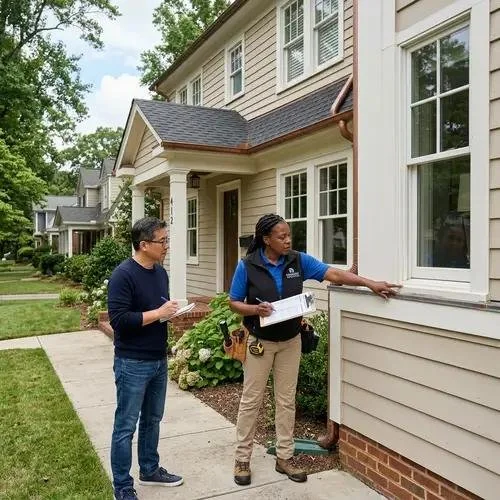
For example, a buyer might decide to have an inspection but agree not to request repairs for minor issues.
That's very different from blindly giving up every protection.
And that's an important distinction.
Not All Contingencies Carry the Same Risk
This is where buyers need to stop thinking in black and white.
Waiving one contingency isn't the same as waiving another.
A buyer who has substantial cash reserves may have a different level of flexibility than someone using most of their savings for the down payment and closing costs.
A newer home may present different concerns than an older property.
A buyer with strong financing may have a different situation than someone whose approval depends on several variables.
There isn't one formula that works for everyone.
The property matters.
Your finances matter.
And the specific language of the contract matters.
The Appraisal Is Another Big One
Let's say you agree to pay $700,000 for a home.
The appraisal comes in at $675,000.
Now there's a $25,000 gap.
Who's responsible for making up the difference depends on the contract and circumstances.
Some buyers may be comfortable accepting appraisal risk to strengthen their offer.
Others simply don't have an extra $25,000 sitting around.
That's not a small detail.
That's a major financial decision.
Know what you're agreeing to before you waive anything.
Don't Waive Something Just Because Everyone Else Is
This is probably the worst reason to waive a contingency.
"The other buyers are doing it."
Maybe.
But they're not buying the house with your money.
They're not responsible for your mortgage.
And they're not the ones who have to live with the consequences if something goes wrong.
Competition can create pressure.
Don't let it create bad decisions.

There May Be a Middle Ground
Buyers sometimes assume they have only two choices.
Keep every contingency.
Or waive everything.
That's not necessarily the case.
Depending on the transaction, buyers and their professionals may be able to structure terms that provide some protection while still making the offer competitive.
For example, inspection terms can sometimes be limited or structured differently.
The details matter.
That's why buyers should have these conversations before they find themselves in a multiple-offer situation.
Final Thoughts
Should you waive contingencies when buying?
Maybe.
But don't do it simply because you're afraid of losing the house.
A competitive offer should still make financial sense.
Before waiving a contingency, understand exactly what protection you're giving up, what the potential financial exposure could be, and whether you can comfortably handle the risk.
The goal isn't simply to get your offer accepted.
The goal is to get the right home without turning the purchase into a financial gamble.
👉 DM "KPG" or call 201-400-7323