Working from home has changed the way people think about their living spaces. What was once an occasional convenience has become a permanent part of everyday life for many homeowners.
But there's a difference between having a desk in a spare bedroom and having a home office that actually works.
A good home office should help you stay productive, feel comfortable, remain organized, and still complement the overall design of your home.
For homeowners in Wayne, NJ, and throughout Northern New Jersey, creating a functional workspace doesn't necessarily require a dedicated room or an expensive renovation.
Here's how to create a home office that looks great and works even harder.
🚨 Thinking About Selling in Wayne NJ?
👉 DM “KPG” or call 201-400-7323 before making decisions that could cost you thousands.
1. Choose the Right Location Before Buying Furniture
The biggest mistake is purchasing furniture before deciding where your workspace should go.
Ideally, choose an area that offers:
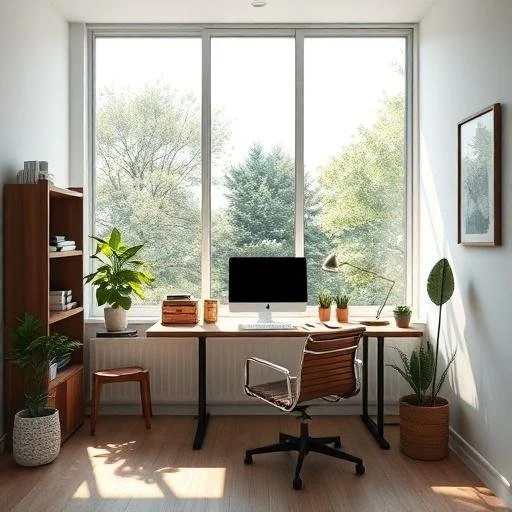
Natural light without excessive screen glare.
Enough room for a desk and comfortable chair.
Separation from household distractions.
Access to electrical outlets and reliable internet.
Some privacy for phone calls and virtual meetings.
If you have an extra bedroom, converting part of it into an office can be a great option.
If space is limited, consider an unused corner, a finished basement, or a built-in desk area.
The key is giving your workspace a defined purpose, even if it doesn't have four walls.
2. Invest in a Desk and Chair That Support Your Body
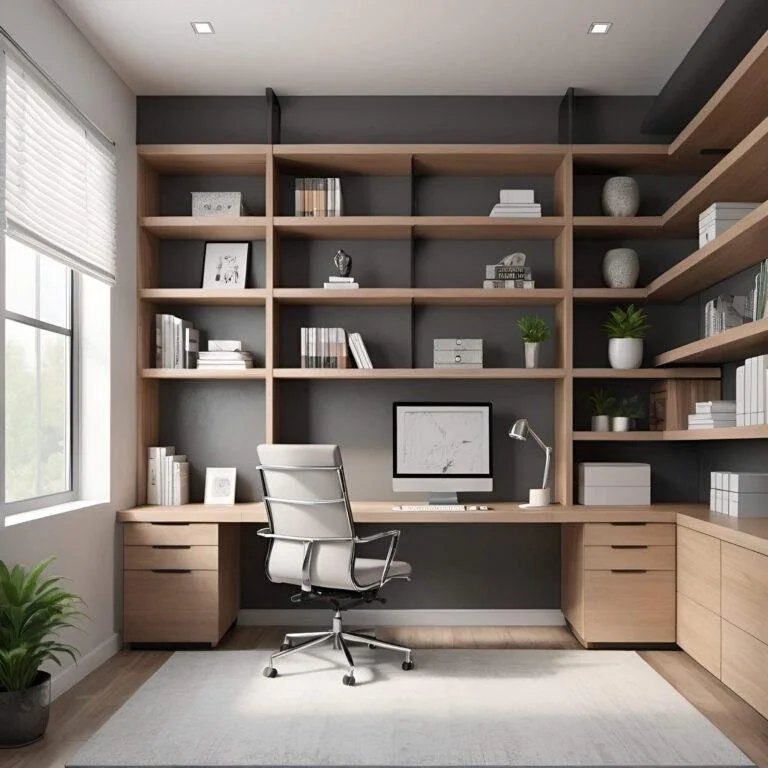
Your desk may be the centerpiece of the room, but your chair could be the most important purchase.
An attractive chair isn't necessarily comfortable for hours of work.
Look for:
Adjustable seat height.
Proper lumbar support.
Comfortable armrests.
Adequate desk depth.
Enough space for your monitor, keyboard, and everyday essentials.
A standing desk is another option, particularly if you spend long periods sitting.
You don't need the most expensive equipment. You need furniture that supports your daily routine without creating unnecessary discomfort.
3. Lighting Can Completely Change the Room
Lighting affects both the appearance of your office and how comfortable it is to work in.
A combination of natural and artificial lighting usually works best.
Consider:
Positioning your desk near a window.
Adding an adjustable desk lamp.
Using overhead lighting that evenly illuminates the room.
Avoiding strong glare on computer screens.
Choosing warmer lighting for a comfortable atmosphere while maintaining adequate task lighting.
If you frequently participate in video calls, consider how your background and lighting appear on camera.
A well-lit workspace looks more professional without requiring an elaborate setup.
4. Make Storage Part of the Design
A cluttered workspace makes it harder to concentrate.
Instead of allowing paperwork, chargers, notebooks, and miscellaneous supplies to accumulate, create designated storage areas.
Some practical options include:
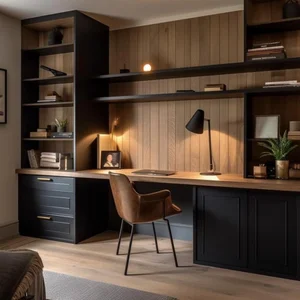
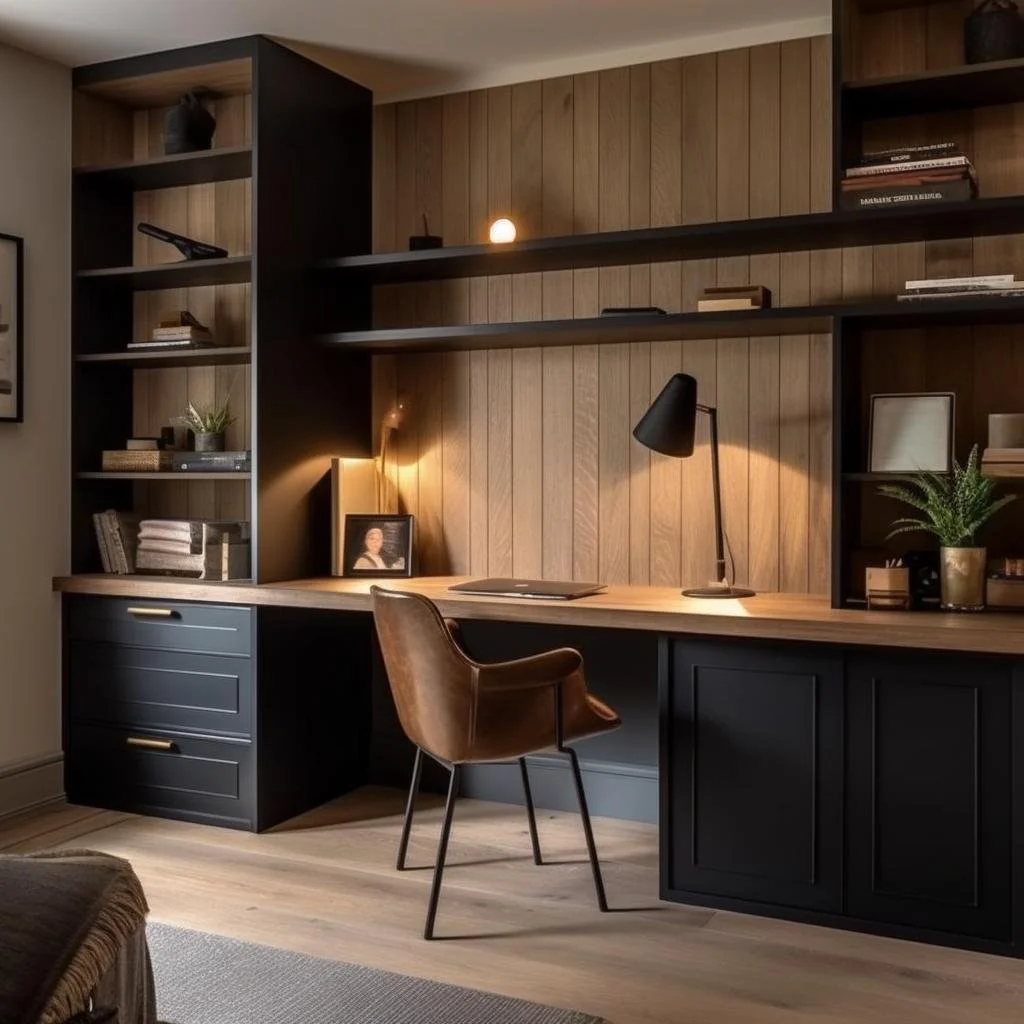
Floating shelves for books and frequently used items.
Filing cabinets for paperwork.
Closed cabinetry to hide visual clutter.
Desk organizers for smaller supplies.
Cable management systems to keep wires out of sight.
One design tip: combine open shelving with closed storage. Open shelves add character, while cabinets help keep the room looking clean.
5. Don't Forget Technology and Connectivity
A beautiful office isn't very useful if your internet drops during a meeting or your equipment constantly creates distractions.
Think about your technology before finalizing the layout.
Consider including:
Equipment
Why it matters
Reliable Wi-Fi
Supports calls and daily work
External monitor
Improves workspace efficiency
Webcam
Better video meetings
Headphones
Reduces distractions
Surge protector
Helps protect connected equipment
Cable management
Keeps the desk organized
If your office doubles as a professional meeting space, invest in a simple, clean background.
You want the room to look intentional without feeling like a corporate conference room.
6. Add Personality Without Creating Distractions
This is where you can make the office feel like your own.
A workspace should be functional, but it should also be somewhere you enjoy spending time.
Consider adding:
A few framed photographs or pieces of artwork.
A low-maintenance plant.
A comfortable area rug.
Neutral paint colors with an accent wall.
Warm wood finishes.
A small seating area if space allows.
Avoid filling every wall and shelf. A little personality goes a long way.
The best designs balance functionality with simplicity.
7. Think About Future Buyers When Designing Your Office
Here's something homeowners should consider: a home office can be a valuable selling feature, but flexibility matters.
Remote and hybrid work have made dedicated workspaces attractive to many buyers.
However, not every buyer needs an entire room dedicated to an office.
If you're converting a bedroom, consider maintaining its flexibility.
For example:
Use a smaller desk that doesn't dominate the room.
Incorporate storage that can serve multiple purposes.
Choose neutral finishes.
Keep enough floor space for alternative furniture arrangements.
Avoid permanent alterations unless they make sense for the property.
A spare bedroom that functions as both an office and guest room may appeal to a wider range of buyers than a highly specialized workspace.
Remember that converting a bedroom can affect how the home is marketed and evaluated, so preserve its practical bedroom function when possible.
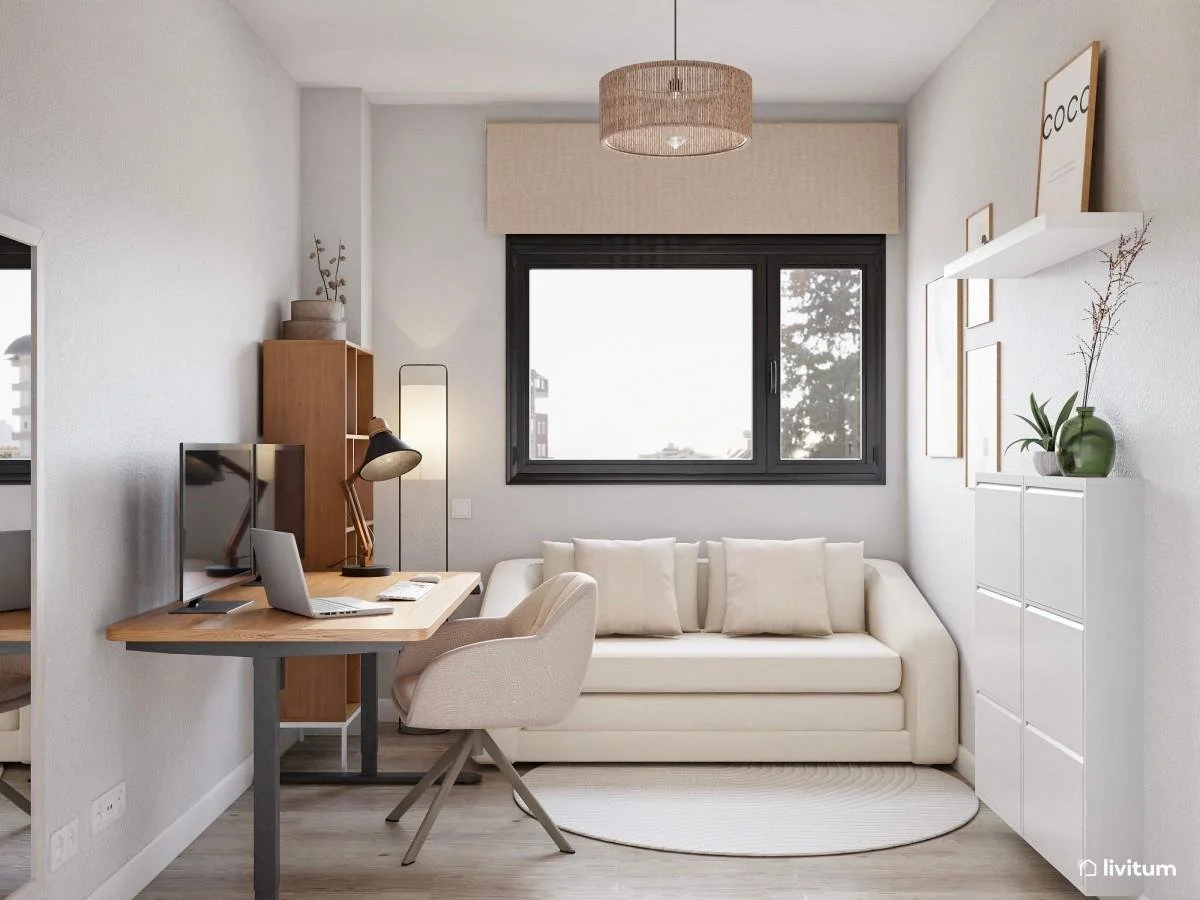
8. Three Home Office Designs Worth Considering
The Minimalist Workspace
Best for smaller homes or homeowners who want a clean, distraction-free environment.
Focus on a compact desk, floating shelves, and concealed storage.
The Executive Workspace
Best for professionals who spend significant time working, making calls, or meeting virtually.
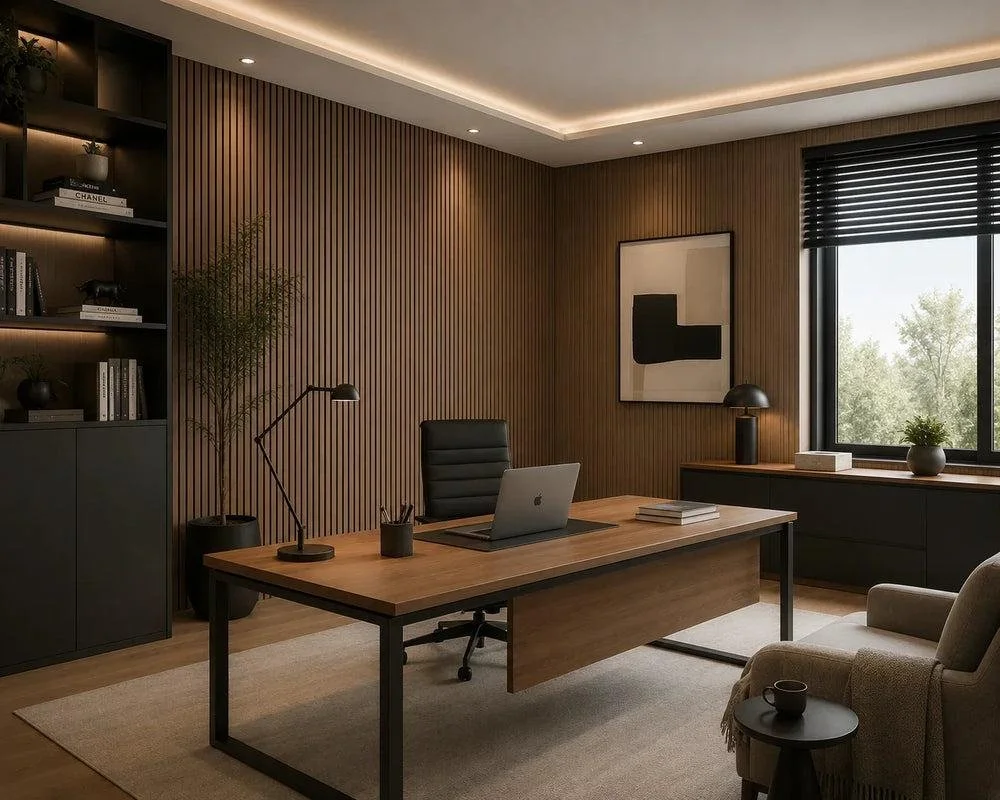
Focus on a substantial desk, ergonomic seating, quality lighting, and a professional backdrop.
The Multi-Purpose Workspace
Best for homeowners who need flexibility.
Combine a compact desk, guest accommodations, and storage without sacrificing the room's primary function.
The Bottom Line
A great home office isn't about buying the biggest desk or creating the most impressive room.
It's about designing a space that supports how you work, keeps you organized, and fits naturally into your home.
Start with the location, invest in comfortable furniture, prioritize lighting and storage, and add technology and personal touches that make the space productive.
And if you're planning to sell someday, remember that flexibility can make your home office appealing to more than just one type of buyer.
The best home office is one that makes working from home easier without making living at home harder.
Thinking About Buying or Selling in Wayne, NJ?
The Karen Peters Group helps buyers and sellers throughout Wayne and Northern New Jersey understand what today's homeowners value and how thoughtful home improvements can influence a property's appeal.
Whether you're looking for a home with a dedicated office or preparing your current home for the market, let's talk strategy.
👉 DM “KPG” or call 201-400-7323